The History of Astrology: Cultural Development and Context

Astrology developed alongside early human efforts to observe and understand the sky. Long before written records, communities relied on the movement of the Sun, Moon, and visible planets to track seasons, organise agricultural cycles, and plan travel. These observations were practical and closely linked to survival, but over time they also became associated with symbolic meaning and storytelling.

As early civilisations began recording celestial patterns, systems emerged that connected repeating sky movements with calendars and social organisation. Ancient cultures in Mesopotamia, Egypt, India, and China created structured observations of the heavens. In many cases, celestial events were interpreted as part of a broader cultural framework that helped societies explain change, uncertainty, and natural cycles.

These early traditions did not resemble modern popular astrology in their format. Instead, they focused on large-scale observations and collective events rather than individual interpretation. Over time, however, these systems became more detailed, creating the foundations for later astrological structures.

Early Sky Observation and Timekeeping

Classical Systems and Structured Frameworks

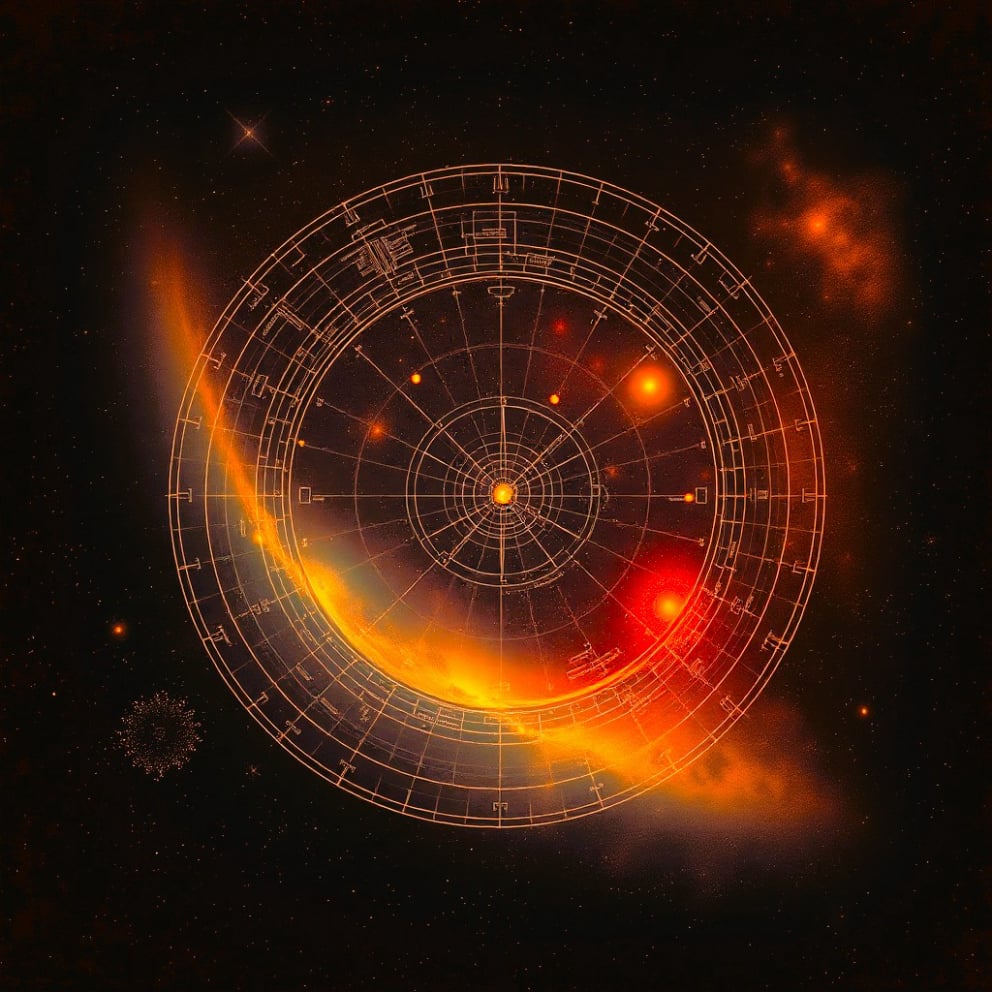
During the classical period, astrology developed into more organised frameworks that included zodiac divisions, planetary symbolism, and chart-based methods. Scholars combined mathematical astronomy with interpretive systems, creating structured approaches that could be recorded and taught.

One of the most influential developments was the division of the sky into twelve zodiac signs. These signs were used as reference points for describing the positions of celestial bodies. Written texts from this period introduced concepts that are still widely referenced today, including planetary associations, houses, and aspects.

As knowledge moved between regions through trade and translation, astrology became a shared intellectual tradition across parts of Europe, the Middle East, and Asia. The exchange of texts allowed terminology and methods to evolve, resulting in multiple schools of thought and variations in interpretation.

Medieval, Renaissance,
and Early Print Culture

In medieval Europe, astrology was often studied alongside astronomy, mathematics, and natural philosophy. Educational institutions sometimes included celestial studies as part of broader learning. At the same time, the role of astrology varied depending on cultural and religious context.

The introduction of printing technology played a significant role in expanding access to astrological material. Almanacs and calendar publications became widely available, often combining seasonal information with symbolic references. This period marked the beginning of astrology as a form of general-interest reading for a wider audience.

During the Renaissance and early modern period, interest in individual birth charts increased. Authors developed more detailed explanations of chart structure, helping to shape the concept of personal astrology that later appeared in popular formats.

Astrology in Modern Media and Contemporary Culture

From Traditional Systems to Everyday Reference Formats

In the twentieth century, astrology became widely recognised through newspapers, magazines, and later digital media. Short sign-based summaries, often referred to as horoscopes, made the subject accessible to a broad audience. These formats focused on general themes and everyday categories such as work routines, communication, or personal priorities.

Today, astrology is commonly approached as a cultural and symbolic system rather than a scientific method. Many readers engage with it as a form of general-interest content, vocabulary learning, or reflective reading. Academic discussions often examine astrology from historical, sociological, or media perspectives, focusing on how symbolic systems develop and remain relevant over time.

Starvia presents astrology within this descriptive and educational context. The aim is to explain how the subject developed, how its terminology is used in contemporary publishing, and how readers may encounter it in modern formats such as horoscope 2026 and introductory personal chart materials.

Starvia

Starvia provides general informational content related to horoscope 2026, tarot 2026 and personal horoscope concepts. All materials are presented for reference purposes only and do not include personalised analysis or guaranteed outcomes.

Cookie icon

This website uses only strictly necessary cookies that are essential for basic functionality, security, and proper display of content.
These cookies are not intended for direct identification, and this message is provided for informational purposes only.
No cookies are used for analytics, tracking, profiling, or advertising purposes.
Personal data is not collected, sold, or shared with third parties through cookies, in accordance with applicable data protection laws and Google advertising policies.

Please review our
Privacy Policy and Cookie Policy.